Tuesday, August 9, 2016

July24 Long drives, Masai and conservation...


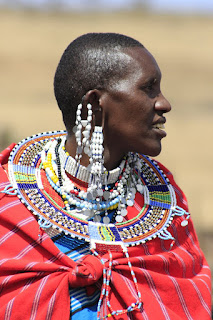
Yesterday was the longest drive of the trip...the back-breaker ride aka the Masaai massage. The two cars drove from our north Serengeti camp to the south-central Lake Manyara area. In the afternoon we stopped off at a Masai village or Boma and indulged in a wonderful organized photography session with the Masaai in their traditional attire, in and around their traditional dwellings and with their families. Prior to arriving here Ali had coached us in the most favourable camera settings and compositions for the portrait photography of the Masaai. The light was bright because it was midday and the strong winter sun cracked down on all features, human and geographical. Black and white maybe the best to view these photographs, Ali surmised. 
By nightfall we had arrived at the Manyara Safari Wildlife camp which is another impressive, sprawling estate of independent thatched (hotel) dwellings scattered on the rim atop Lake Manyara and connected by well-lit walkways to the main hub. We had dinner at this beautiful lounge over the lake and watched a few local entertainers sing and dance on the patio. That evening, at the invitation of our tour leader,activists activists from the PAMS foundation spoke to us about their elephant conservation efforts in Tanzania and how their techniques are credited with finally turning the tide against poachers. On behalf of Fairtrade Safaris, our amazing tour organizers and operators, PAMS was presented with a $4000 gift to promote their conservation work.    


A good night's sleep later we pack-up and head-out toward the town of Arusha about 120km away. The drive is uninteresting to me because oddly enough the roadside villages, businesses and shops look very much like those in India. The big difference is that even this remote, rural Tanzania is a much cleaner country, with less litter and garbage strew around human settlements and roadways. Bathrooms at any and every stop along the two week trip have been clean and usable, unlike their counterparts in India where I grew up and traveled much. It is indeed a happy surprise to find the ethic of cleanliness not just stated but manifested in daily life.

We will arrive at this 5-star resort Serena Hotel in Lake Duluti and as we drive the last few miles to the security gate I wonder why the road leading to such a rich international resort is unpaved and in such poor condition. How is it that international conglomerates are able to make huge investments in hotels and resorts such as these while ignoring the surrounding infrastructure and people? These businesses with their running hot water and foreign cuisine stand in sharp contrast to the poverty, shambles and disintegration all around them? 

The visit to the Masai Boma yesterday was billed as an educational visit to an old culture and people. I anticipated that my years and experience blending (albeit briefly) with the wisdom and way of the Masai would yield some insights useful to my life and spirituality I think I was disappointed. I think, because I am not sure of of this…but I do feel strongly so I am writing thus…
Our visit was very transactional, opportunistic and deeply capitalistic in its nature. As photographers we were looking to capture the deeply contoured old Masai faces against the colorful red fabric, the children with flies settled upon their faces, and Masai women against the backdrop of the cow dung huts. We did do this but it was without focus. Young Masai men speaking fluent English and expertly directing our movements, ordering their companions to pose or remove themselves from photographs and offering everything from handcrafted jewellery to a buffalo's blood-letting for a price seemed to indicate to my discomfort that this culture sale was good business. 


July23 Camping at a Serengeti watering hole...


 This night is interrupted by a lion near the water hole not more than a hundred years adrift of the tent. Dad awakes in a panic but cannot find his voice loud enough to wake me up. So I sleep on and dad panics on! Monkeys are chattering as they do when they anticipate action, the single old buffalo that is rejected by his herd is somewhere in this mix... possibly the victim and there is obviously a carnivore or two on the prowl in the moonlight. In the morning we find out that a herd of elephants passed by not to far away and we breakfast as we watch zebra and wildebeest graze past the watering hole. This is surreal. 
Today is a rest day for some of us like Pat, Dad and I only take one short game drive. Ali, Susan, Jim and Nahid have gone back to the Kenya border to try their luck at photographing the elusive river crossing. 
Later in the day we witness real drama. As we approach several cars parked near an acacia we see a leopard sleeping on a horizontal tree limb about 20 feet off the ground, its legs and paws hanging down toward the earth. Looks to us like it might have just consumed its kill and was resting. However, even as we watched, it awoke, gracefully descended the tree, walked a few hundred yards and crossed between our cars to the other side of the road. And with a dozen zoom lenses trained upon it, it ducked in the short grass and disappeared. Up ahead in the distance we watched a lonely antelope pick up its head to smell the air as his eyes darted from side-to-side and he stood deathly still while the wind whipped everything around him. The hunt was on. For five very slow minutes leopard spots faintly appeared and disappeared in the grass as we tracked the predator, who tracked the antelope. After a complete stillness in which we (and the antelope) worried about where the leopard was, it pounced from the undergrowth and leapt at the antelope. The antelope was alert and he kicked into a flying start. The chase lasted all of ten seconds and the antelope got away. Soon after, the leopard walked back to his tree, found another nice branch and lay down for part-2 of this nap!


As we lie in our beds the winds whip up in the Serengeti as they do every night between 10pm and dawn. Travellers across the endless plains, they are here and knocking at the door of our tent. Zippers taut and the fabric flapping loudly the tent strains to hold its shape as gusts finds passage thru openings in the structure. 
I go outside to bring in the wash off the clothesline after dad tells me he doesn’t want to search the camp in the morning looking for his safari clothing. Hmm…I wickedly wonder, how hard will it be to find camouflage clothing when it blows off into the woods! Probably harder than finding the  American Indian sniper dude who spent three days camouflaged in the Vietnam countryside without moving or eating just waiting  for his target!  Fern told me about this hero of his during our morning game ride! As I fold the fresh dried clothes, dad mentions that its been a little under a hundred  years since his mother (dadiammi) was born a few miles from here in Kenya!  Coincidentally, dad was able to visit his mother’s land earlier today during the afternoon game safari with Fern and Phillips.  
’The claim of belonging to’ and the 'right to belong to'  a place and a culture and to adopt it and call it your 'own' or you ‘home' …has in my opinion become one of the fascinating questions for people of our time.  Increased mobility of people across the globe and human migrations with no return has displaced people and their descendants.  While immigrants like Dad who came here as adults self-identify as ‘Indians’ or ‘Hyderabadis’, the next generation is not Indian. They self identify as Americans. However, there are other families where global educations, jobs at multinational companies and frequent family migrations have left the young ones trying to answer the question of where is home for them. I have a close friend who has spend his entire professional career working in Europe and Asia all the while raising his children. These children have not spent a substantial part of their lies immersed in any one culture or country to call it their own…comfortably. What do they call home? How do they self-identify? Do they feel as strongly about their ‘home’ and what is means to them as they parents did?
There are  Middle eastern counties where many of us work for years and indeed entire lifetimes without earning  the right to settle down there and call it home. Our kids in these countries have to be schooled and educated elsewhere giving them insufficient years and immersion in any one place to call it home. This maybe an age old issue that migrant labor has always created.

While the immediate and smaller question is about what one calls home…
the larger question asks, Is there a need for a human being to have a home-town or home-culture? 
Is this a strengthening, nurturing and inspiring influence or a psycho-social construct that is rendered irrelevant with the advent of social media, globalization and mass migrations?


July22 Wildebeest, lions, buffalo and everything else...


late night - I am awakened in the night by a distant roar... hopefully distant but nevertheless a roar. At the other end of the camp Pat is awakened by the grazing and shuffling of a 500 pound buffalo a few feet from her front door which is securely zippered shut. There are other sounds in the night which thankfully are unidentifiable by us. The winds pickup around 2am and Ali Raza worries that the creaking and swaying of his tent is going to cause it to come crashing down. That is enough to keep him awake. Noone else complains or reports being scared so it looks like most everyone got sleep... except of course the lion and the buffalo ;-) !
At 4am this morning Susan, Jim and Fern are awakened and whisked away to a Balloon Safari Ride at dawn. The rest of us sleep in and start off into the Serengeti after breakfast. We set out for the Mara river to the north. This river poses a natural barrier to the migrating herds across the plains and one key objective is to photograph a river crossing. As on TV, so it is in real life, when herds of wildebeest, zebra and antelope cross a river that is lined with opportunistic carnivores like the lion and the crocodile, there is much panic, action and fodder for photographers! 


7/22.2
God or nature has final control. This is no more evident than as I wait for an imminent river crossing. Imminent because a herd of wildebeest are lined up on the Kenya shore of the Mara and we lie in wait like carnivores with cameras to chronicle the struggles of their weak and the athleticism of the strong as they cross the river. Our job is to document the beauty of this dynamic act as it evolves. However this crossing or not is entirely out of our control, perhaps out of the control even of the wildebeest. There is some psycho-biological trigger that will eventually drive them off the plateau on their bank and toward the river below. The ensuing momentum and weight of body-on-body will then drive the frenzied masses to leap and bound across the rapids toward the other shore even as cameras and carnivores pick them off. But I am getting ahead of myself again because although this is what I saw on tv Nat-Geo, since I arrived in Tanzania I have been repeatedly reassured that there is ‘no guarantee’!
My friend and Photography coach Ali Khataw is not a patient man. However, he set the expectations right off the bat by saying to us, “In Africa time stands still and we move at the pace of the animals”. Wildebeest, hippos, zebras and the natives of this land are in no rush. The clocks they obey are biological unlike the ones we follow, their goals are driven by instinct and survival rather than logic and achievement and perhaps they know better (than us) that their function and beauty is in their graceful existence as opposed to accomplishment. 

Gabbar singh’s frustration at the crossing as he waits in the jeep for the wildebeest to cross:

kitney wilderbeest the?
hazaar sarkar!
who hazaar hai aur hum panch!
bahut na insafi hai yeh!
kitni daer lagegi ?
pata nai sarkar 
inn hazaar wilderbeest neh hamari izzat puri mitti mein mila diya
iski saza zaroor milegi !!!

 We are done taking turns peeing in the dangerous bushes behind the car, done eating lunch from cardboard boxes and done asking about the life-cycle and decision-making abilities of the wilderbeest. Now its come down to a battle of attrition between the wildebeest outside and the wilder-beasts within. Can we wait till nature takes it course? Will nature out-wait us today? A life lesson is in progress. 
Whatever happens we will be the wiser tomorrow.
Update; the aforementioned wildebeest are now about 5-10 feet further behind on the other bank then where they were at the start of this piece. The temperature on the ground is about 90F. So far wildebeest indecision and human patience is the order of the hour! 
Update #2: Our wildebeest previously arranged in a chaotic looking herd find a way to fall in line and walk single file on their river bank heading away from the river.   


7/22.3
This morning we drove a short way out of the camp for a sunrise lesson in photography. Ali Raza taught us about good light and bad light and how each translates into the quality of our pictures. A few pictures before and after sunrise with different compositions and variations of iso, Fstop and exposure illustrate for us the lesson that Ali had planned. Ali’s photo-sight unveils amazing compositions from a mundane even boring landscape, finds trees and natural shapes to frame animals, uses the Kopi to rejuvenate a landscape and generally turns viewing into artful vision. His words, ‘Stop looking and start seeing”, espouse a lesson in mindfulness and anticipation that is universal in its import.   

Final update: On the question of what happened with our wildebeest crossing…Neither nature nor we waited-out the other to win. Instead, nature outwitted us and even as we idled, unbeknownst to us the crossing had begun and by the time we drove to the site to witness it, it was all but over. To be entirely truthful this was a mini-crossing of a hundred head of cattle as opposed to the larger crossings which we had anticipated.  ...So we hope to get another try at this….but as far as I am concerned it won’t kill me if I don’t see it on this trip. The effort required is enormous: a 6 hour round trip in a jeep on bumpy cross-country terrain with an indeterminate wait for the animals to make up their minds!!!

( the leopard camouflaged in ..you can barely see its head...stalking the lonely antelope under the tree )


Dinner on the range:
After watching the invisible cheetah stalk a gazelle in the (not so) tall grass yesterday on the plains I am now spooked as I walk down the beaten path from the tent to the dinner area, This well worn path has taller grasses to one side and I find myself looking for movement and markings in the waving grass knowing fully well that if I did spot such an animal, my end would be stunningly quick! Nevertheless I cannot but look as I walk back to my tent after dinner. The beds here are comfortable, the bed linen clean and luxurious and the pillows aplenty. So good in fact that when I mentioned to South African tour guide Pierre that these beds might be better than those in our Hiltons and Marriotts, he said “There’s an old saying here: Why limit yourself to 5 stars when you can enjoy 5 million stars”! 
The food at the camps leaves us impressed evening after evening. We start dinner with a soup and hot buttered rolls (seriously!!! soup is the first course on the Serengeti?) followed by a most delicious salad of sliced avocados with onions, tomatoes and lemon dressing. Then comes a parade of dishes served separately followed by dessert. Typically we have a delicious beef or chicken stew with rice, some sautéed vegetables and fried potatoes on the side. I have yet to stop a waiter from serving me seconds…

As I sit inside the tent writing this, no more than three feet from a the door held together by a zipper I hear rustling outside and freeze…not once but over and over. I think…."That animal can smell me and knows I am here while I haven't clue who he is... If its a lion can it rip this military spec tent or will his paws fail… if its a buffalo or wildebeest it can surely run right into this tent and upend the whole thing”…. and on and on and on my mind works overtime. I cant look outside because I have zipped all windows shut and so as they say in electrical engineering ‘the feedback loop is broken’…I can’t know what it is so I can’t be ready for it. I feel my abs tighten…when the going gets scary the scared go to the bathroom. Wait a minute…what if the animal comes back there? Are the flaps on the bathroom secure…even if secure only means zipped up! Oh No. Beam me up God before I get mauled. PLLLLEEEEAAASSSEEEE!!!! I wonder how Pat and the other scardy cats are sleeping in their tents…or not! Please God can we live to exchange stories at breakfast?
Wait... I think i hear a lion rumbling…or
is that a wildebeest making its ridiculous snort-noise…or
is that Fern or Pierre snoring in the next tent over?
Stay tuned…the answer will be posted if yours truly survives the nite in the wild!
Lala-Salama  
(translation:  may you find Peace in Lalaland (sleep)!)


July21 ...in the kingdom of the animals!


 Today is the first all day safari drive in the Serengeti. What that means is that we will leave our camp site after breakfast and drive the dirt roads all day looking for wild animals to photograph. We will stop when and where we find them, for as long as it takes for the camera's appetite to be sated and then move on. Our drivers are also our guides and they are trained to track and spot game. Both Phillip and Edwin have an uncanny ability to locate interesting big-game animals. 
The photography part of the tour is now very interesting. In one car Fern is coaching, modelling an calling out the shots that Gabi, Dad and I should be taking and in the other Ali is doing the same for Susan, Pat and Rick. Technical words and settings get thrown around in the heat of battle as a scene changes before us with the scattering of monkeys or the running of a herd of zebras or the angry stomping of an adversarial buffalo. Every now and then Fern yells "I-Phone shot" to let us know that even though we may think we have a great picture, something about it is wrong... either the light is too harsh or the distance to great or the background too busy...rending it an i-phone pic for the family and not the target of a pro-photographer. 
By nightfall we arrive at our northern Serengeti campsite called Bologonya...and yes we are "under canvas" for three nights here! The food is incredible...I wonder aloud why the Marriots of the world don't steal these cooks in the bush. Chicken stew, soup, salad and dessert all are served and consumed. The long dining table seats our entire group and our guides and this coming together at the end of our long day of driving and photography is a welcome conclusion.  


This morning we awoke to a family of African elephants lazily making their way past our encampment. There were elephants of all sizes and provided for a great early photo-opp. After this night at a Katikati camp in the central Tanzanian Serengeti we set out on a game drive north that would lead us to our camp for the next 3 days. This is to be our basecamp for full scale attempts to see 'river crossings’. River crossings are those elusive events for the filming and publicizing of which National Geographic is famous. They refer to the crossing of the Mara river in Kenya and Tanzania by the massive migrating herds of the Serengeti plains including antelope, wildebeest, zebras, buffalo, gazelles, elephants and many more. The reason why this is riveting drama is because all known predators of these herds lie in wait on the shores of the river to exact their price. These include carnivores such as crocodiles, lions, leopards and cheetas. The migrating herds contain young yearlings born in the last few months and vulnerable to the river current and the poaching predators. These travelers find strength in numbers and therefore assemble until their collective confidence allows them to make a run for it. On the other hand the ploy of the stalkers it to find the vulnerable and weaker animals in the herd and separate them before attacking. It the cycle of life and survival played out in all its raw reality right there on a river bank. We have come to Africa in the hope that we will witness a crossing. 
Dinner was wonderful and perhaps the best of this trip. The more permanent game lodges should take a page out of the culinary handbook of these temporary camps. The menu was rice, chicken stew, fried potatoes, avocado salad, pumpkin soup, lentil and okra with cake for dessert.  
After dinner we were walked to each of our tents because one is not allowed to walk in the camp unaccompanied by staff. The camp is located near a picturesque water hole that is visited by buffalo, hippos and lions.